
Weighing a Major Capital Project Against Redeploying the Equity
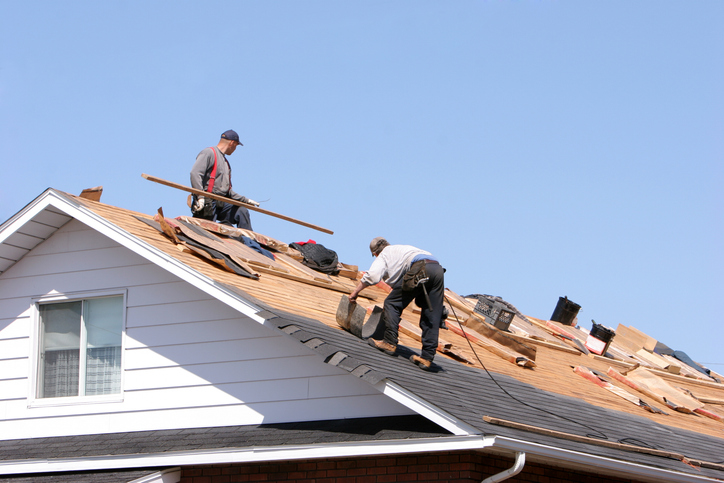
Return on equity is usually framed as a question about income. For owners of aging buildings it is often a question about capital: the property still performs, but keeping it performing requires writing a large check.
This case study looks at how that decision can be evaluated as an investment choice rather than a maintenance obligation.
Investor Snapshot
- Investor profile
- Gary and Susan H., property owners in their mid-60s.
- Property
- Neighborhood retail center built in the 1970s.
- Ownership history
- 22 years, owned free of debt.
- Immediate issue
- Roof replacement, parking lot reconstruction, and HVAC units all reaching the end of their useful life within roughly three years.
- Goal
- Decide whether to fund the work or redeploy the equity elsewhere.
The Challenge: The Property Was Profitable Until the Capital Bill Arrived
On paper the center was doing fine. It was leased, it was debt-free, and it produced steady income. What the income statement did not show was that three major building systems were approaching replacement at roughly the same time.
The owners were being asked to make a substantial new investment in a fifty-year-old building — and to make it at the point in life when they were trying to reduce, not increase, their involvement with the property. The work would also take months, during which parts of the center would be disrupted and some tenants might expect concessions.
Return on Equity Has to Include the Capital You Are About to Spend
The standard return-on-equity calculation divides annual net cash flow by current equity. That backward-looking number can be misleading when a large capital event is approaching.
A forward-looking view generally accounts for:
- The full cost of the planned work, not the amount currently sitting in a reserve account.
- Income disruption during construction, including concessions, vacancy, and slower leasing.
- Whether the work is expected to increase the property’s value, or simply preserve it. Replacing a roof rarely adds value equal to its cost; it prevents value from being lost.
- What comes after. Buildings of a certain age tend to generate successive capital events rather than one.
Once the planned spending is included, a property producing an acceptable current return can show a materially lower forward return on the equity the owner actually has at risk.
The Strategy: Compare Three Paths Side by Side
Rather than treating the capital project as a foregone conclusion, the analysis compared three options on the same terms:
- Fund the work and hold. Preserves the asset and the tax position, requires new capital, extends active management.
- Sell without an exchange. Avoids the capital project and produces liquidity, but recognizes gain and depreciation recapture in the year of sale.
- Exchange the equity. Defers eligible gain, avoids funding the project, and moves into professionally managed replacement property where capital planning is the sponsor’s responsibility.
The comparison is only useful if each path is evaluated on the same basis, including the taxes, the capital required, the management burden, and the risks of the replacement investments.
Why an Exchange Could Fit
- Avoids committing new capital to a building the owners were planning to exit anyway.
- Transfers future capital planning and execution to a professional sponsor.
- Keeps eligible gain deferred rather than recognizing it to escape the project.
- Allows the equity to be spread across multiple properties rather than concentrated in one aging asset.
DSTs carry their own capital risk. Sponsors budget reserves and can fund capital needs, but those costs affect distributions, and offerings can require additional capital or reduce distributions if a property underperforms. The comparison is between different capital risks, not between capital risk and none.
The Outcome
The owners avoid a capital project they did not want to finance or supervise, and redeploy the equity into replacement real estate. The relevant improvement is not simply a higher distribution rate — it is that the capital they would have spent on a roof stays invested.
Investor Takeaway
If your property has a major capital event coming, do the return-on-equity calculation with that spending included before you commit to it. A building that looks like a good hold at today’s numbers can look different once the next three years of capital are on the page.
This is a hypothetical case study — the investor described is not an actual client.
Case Study Disclosure
Illustrative example only. This case study does not represent an actual client and is not a guarantee of future results. It is a hypothetical composite informed by situations commonly encountered by real estate investors; the individuals described are not actual clients and the scenario is not an account of an actual transaction. Charts and diagrams are schematic illustrations of structure and do not depict actual amounts, offerings, or results. Photographs are stock imagery and do not depict actual clients, advisors, or properties. The appropriate 1031 exchange or DST strategy depends on an investor’s individual facts, objectives, tax situation, liquidity needs, and risk tolerance. DST and other private placement investments involve material risks, including illiquidity and the potential loss of principal. Nothing on this page is tax or legal advice. Investors should review the applicable offering documents and consult their tax and legal professionals before making an investment decision.