
Utah 1031 Exchange Real Estate Rules
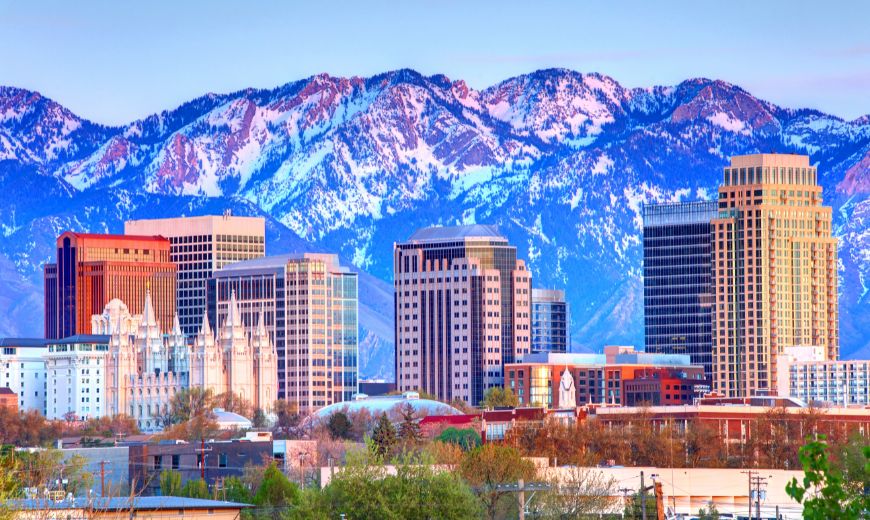
Utah is one of the states where a 1031 exchange discussion should start with flexibility. The state gives investors a wide range of reinvestment options because its economy is not built around one single metro or one single industry. Utah continues to attract capital through a mix of growth, business expansion, and sector diversity, and its targeted industries include advanced manufacturing, aerospace and defense, financial services, life sciences and healthcare, and software and information technology.
That matters because Utah real estate investors often have more than one strong next move. A seller in Salt Lake County may exchange into a stronger multifamily asset. An owner in Utah County may want to shift from office-adjacent property into industrial or flex space. Another investor may want to move from active management into a passive structure or out of one Wasatch Front submarket into a faster-growing corridor. In Utah, the exchange is often less about escaping a weak market and more about reallocating capital inside a strong one.
The population backdrop supports that flexibility. Utah’s population estimate reached 3,538,904 in 2025, up from 3,503,613 in 2024. That continued growth helps sustain demand for housing, logistics space, healthcare-related real estate, service retail, and business-oriented property in the state’s stronger submarkets.
With appreciation comes capital gains exposure.
Understanding the Utah 1031 exchange rules is essential for investors who want to preserve equity, defer taxes, and reposition their portfolios without immediately recognizing gain.
A properly structured exchange under Section 1031 of the Internal Revenue Code allows a Utah investor to sell real estate held for investment or business use and reinvest into like-kind real estate while deferring federal gain recognition.
Why Utah Is Different
Utah is different because the tax and closing story is not built around a classic transfer tax model. Utah still has a state income tax, so state-level tax planning matters, but the closing mechanics are more about recording fees and county recorder procedures than about a traditional state real estate transfer tax layered onto the deed. Utah’s income tax page reflects a 4.5% individual income tax rate, which means a Utah investor still has a state-level issue to consider when deciding whether to sell outright or exchange.
At the same time, Utah’s property-transaction framework is becoming more explicit about transfer-related charges. Utah’s 2024 Property Transaction Amendments and related materials distinguish between transfer taxes and recording fees, and county recorder practice remains central to how the transaction is actually processed. Utah’s county recorder fee structure has historically centered on recording fees rather than a statewide real estate transfer tax, and county recorder guidance now reflects updated fee schedules.
What Qualifies in a Utah 1031 Exchange

Utah follows the same federal eligibility framework as other states. The relinquished and replacement properties must be U.S. real estate and must be held for investment or productive use in a trade or business.
In practical Utah terms, that can include apartment buildings, rental homes, mixed-use buildings, industrial and warehouse properties, medical office assets, self-storage facilities, hospitality property held for investment, land held for investment, agricultural property, and Delaware Statutory Trust interests.
Property that generally does not qualify includes primary residences, personal-use vacation homes, and property held mainly for resale. Investors involved in flips or fast-turn development strategies should be careful not to treat inventory as investment real estate.
How a Utah Exchange Usually Gets Built
The exchange should be designed before the property goes to market. Investors should model expected gain, identify depreciation recapture exposure, review debt replacement needs, decide what kind of replacement property they actually want, and engage the Qualified Intermediary before closing.
Once the relinquished property closes, the federal timeline starts. The investor has exactly 45 days to identify replacement property and generally 180 days to complete the acquisition. Sale proceeds must go to the Qualified Intermediary. The seller cannot receive or control the funds without jeopardizing the exchange.
In Utah, the recording side should also be part of the plan. County recorder procedures, document formatting rules, and recording fees should all be understood before the closing statement is finalized.
Utah Tax and Closing Mechanics
Utah’s biggest state-level tax distinction in this context is not that it is tax-free, but that it is relatively simple on the income-tax side. Utah uses a single-rate individual income tax system, and the state’s income tax page reflects a 4.5% rate. That still creates a state-level reason to analyze deferral rather than assuming only the federal side matters.
On the closing side, Utah county recorders charge recording fees rather than relying on a broad statewide transfer-tax system in the way many other jurisdictions do. Utah’s recorder fee statute historically set the standard recording fee at $40 per instrument, and county guidance now reflects an increase to $45 effective May 6, 2026 in at least current recorder notices following legislative changes. The recorder fee statute remains part of the practical closing picture. Utah Code Section 17-71-407
Utah’s Tax Commission also continues to use a real property transfer survey to gather transfer information electronically, which reinforces that even without a classic transfer tax, real property transfers still sit inside a meaningful state and county administrative process.
Boot Still Matters in Utah

Utah does not change the federal boot analysis. If the investor receives cash, reduces debt without replacing it, or otherwise receives non-like-kind value, that amount may become taxable. Investors who want full deferral still generally need to buy equal or greater value, reinvest all net equity, and replace equal or greater debt, or add fresh cash where needed.
Because Utah often feels efficient and transaction-friendly, some investors may underestimate the importance of getting the debt and value structure exactly right. That is where a technically correct exchange can still become an economically disappointing one.
What Actually Creates Risk in Utah
The obvious risks still matter: missing the 45-day deadline, weak identification language, taking possession of exchange funds, and underestimating debt replacement needs. But Utah also creates a more strategic kind of risk. Investors may focus too much on the fact that the market is growing and not enough on whether the replacement property actually improves the portfolio.
A multifamily thesis in Salt Lake County is not identical to an industrial thesis in the same region. A growth-oriented strategy in Utah County is not the same as a more stable income play elsewhere along the Wasatch Front. The strongest Utah exchanges usually start with a reinvestment thesis and then use the exchange structure to support it.
Why Work With GCA1031 in Utah
In Utah, a strong exchange advisor is doing more than tracking deadlines. They are helping the investor move within a strong and diverse market without unnecessarily shrinking the capital base through immediate tax recognition.
GCA1031 helps coordinate the Qualified Intermediary process, the tax analysis, the closing team, and the Utah-specific issues that matter in practice, including state income tax treatment, recorder fee structures, and the practical mechanics of county recording.
Start Your Utah 1031 Exchange
If you are searching for Utah 1031 exchange rules, how to do a 1031 exchange in Utah, or Utah exchange guidance that reflects the state’s actual tax and closing structure, GCA1031 provides structured, compliant execution from pre-listing planning through closing.
Contact our exchange specialists before listing your property so the exchange is built around your gain, your market, and your next acquisition strategy.