
New Mexico 1031 Exchange Real Estate Rules
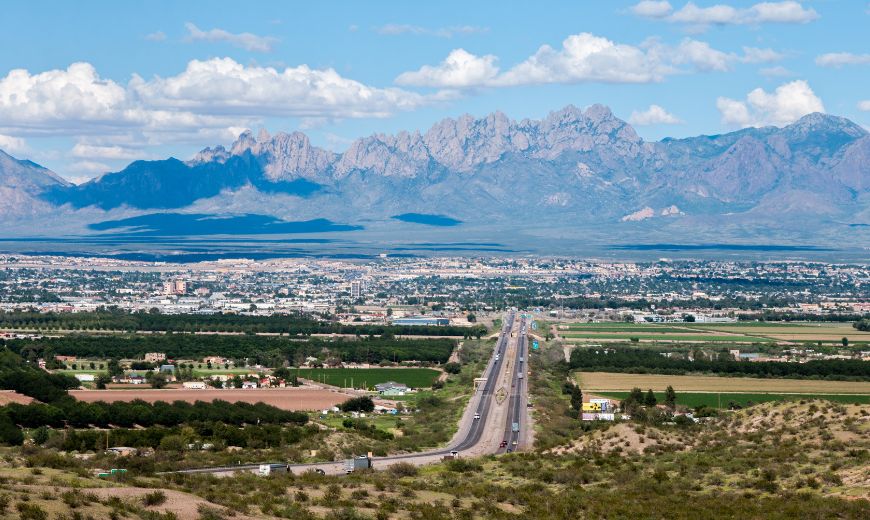
New Mexico offers a distinctive real estate investment environment shaped by aerospace, film, manufacturing, energy, biosciences, agriculture, global trade, and outdoor recreation. While the state’s overall population estimate edged down from 2024 to 2025, investment activity continues across important New Mexico markets such as Albuquerque, Santa Fe, Rio Rancho, Las Cruces, Roswell, Farmington, and other strategic development corridors where industry expansion, tourism, healthcare, research activity, and site-readiness efforts continue to support demand for selected residential and commercial assets.
With rising appreciation comes rising capital gains exposure.
Understanding the New Mexico 1031 exchange rules is essential for investors seeking to preserve equity, defer taxes, and strategically reposition real estate portfolios.
A properly structured 1031 exchange under Section 1031 of the Internal Revenue Code allows New Mexico investors to sell real estate held for investment or business purposes and reinvest the proceeds into like-kind property while deferring federal capital gains taxes.
New Mexico also requires its own state-level analysis. Investors should understand the state’s graduated personal income tax system and should be aware that certain residential property transfers in New Mexico involve a Residential Property Transfer Declaration Affidavit under state law. Strict IRS deadlines still apply, and poor planning can create tax and closing complications.
This guide provides a comprehensive explanation for New Mexico real estate investors seeking clarity on:
- New Mexico 1031 exchange rules
- How to do a 1031 exchange in New Mexico
- State tax considerations
- Investment property eligibility
- Advanced exchange strategies
- Risk management
- Investor FAQs
- Step-by-step execution guidance
Understanding the Foundation of a 1031 Exchange in New Mexico
A 1031 exchange allows investors to defer recognition of gain when they exchange investment real estate for other investment real estate. The gain is deferred, not eliminated, and the deferred gain carries forward into the replacement property’s basis.
For New Mexico investors, this remains especially valuable in markets where long holding periods, selective regional demand, and constrained inventory have increased values over time. In places such as Albuquerque, Santa Fe, and parts of Las Cruces or Rio Rancho, meaningful appreciation can still create significant unrealized gain, making tax deferral an important part of portfolio planning.
Who Qualifies for a 1031 Exchange in New Mexico
The following parties may complete a 1031 exchange in New Mexico: individual investors, married couples, single-member LLCs, multi-member LLCs, partnerships, S corporations, C corporations, and trusts.
The same taxpayer who sells the relinquished property must generally be the taxpayer who acquires the replacement property. Because taxpayer continuity matters, entity structuring should be reviewed before the property is listed for sale.
What Property Qualifies Under New Mexico 1031 Exchange Rules

To qualify, the property must be real estate located within the United States, held for investment or productive use in a trade or business, and exchanged for replacement property that will also be held for investment or business use.
Examples of qualifying New Mexico properties include rental homes, multifamily buildings, mixed-use properties, industrial or warehouse properties, hospitality assets held for investment, retail centers, office or medical office buildings, land held for investment, agricultural land, and Delaware Statutory Trust interests.
Non-qualifying property generally includes primary residences, personal-use vacation property, fix-and-flip inventory held primarily for resale, and other property not held for investment or business purposes.
Step-by-Step: How to Do a 1031 Exchange in New Mexico
Step 1: Pre-Listing Planning
Before listing the property, investors should work with a 1031 exchange specialist, tax advisor, and Qualified Intermediary to estimate federal gain exposure, evaluate depreciation recapture, determine reinvestment goals, and prepare the exchange structure. In New Mexico, investors should also review how the transaction will be treated under the state’s income tax rules and whether any transfer documentation issues may arise at closing.
Step 2: Sell the Relinquished Property
At closing, sale proceeds must go directly to the Qualified Intermediary. The investor cannot receive or control the funds, and exchange documentation must be executed properly. Constructive receipt of the proceeds will generally disqualify the exchange.
Step 3: The 45-Day Identification Period
You have exactly 45 calendar days from the closing date to identify replacement property. Identification must be in writing, must clearly describe the property, and must be delivered to the Qualified Intermediary or other proper party by midnight of day 45.
The standard identification methods still apply in New Mexico, including the Three Property Rule, the 200 Percent Rule, and the 95 Percent Rule. Failing to properly identify replacement property within the deadline causes the gain to become taxable.
Step 4: The 180-Day Exchange Completion Rule
You must acquire the replacement property within 180 calendar days from the relinquished property sale date or by the due date of the tax return, including extensions, whichever comes first. There are no routine extensions.
New Mexico State Tax Considerations
New Mexico does not have the same tax profile as a no-income-tax state or a state with a special capital-gains subtraction. Instead, investors need to account for New Mexico’s graduated personal income tax rates. That means a New Mexico investor may still care about both federal and state-level gain consequences, even though the exchange itself is still primarily driven by federal Section 1031 rules.
New Mexico also has state-specific filing and property administration rules that can matter in real estate transactions. For example, the Taxation and Revenue Department provides a Residential Property Transfer Declaration Affidavit for qualifying residential transfers under Sections 7-38-12.1 and 7-38-12.2 NMSA 1978. While that is not a substitute for exchange planning, it is part of the state-specific closing and property-record framework investors should understand when selling or conveying certain residential real estate.
As a result, New Mexico investors should coordinate with a New Mexico CPA or tax advisor, closing professionals, and the Qualified Intermediary before the sale closes.
What Is Boot in a New Mexico 1031 Exchange
Boot is any taxable value received during the exchange. Common examples include cash that is not reinvested, debt relief that is not replaced with equal or greater debt or new cash, non-like-kind property, and improperly structured seller credits or closing adjustments.
Boot is generally taxable in the year of the exchange. To avoid boot, investors typically seek to acquire replacement property of equal or greater value, reinvest all net equity, and replace equal or greater debt, or contribute additional cash when necessary.
Advanced 1031 Strategies for New Mexico Investors

New Mexico investors often use 1031 exchanges for consolidation, diversification, and management simplification. One strategy is to exchange several smaller properties into one larger multifamily, mixed-use, or commercial asset. Another is to sell appreciated New Mexico property and diversify into other U.S. markets or more passive ownership structures.
Reverse exchanges can also be useful when attractive replacement property becomes available before the relinquished property is sold. Delaware Statutory Trust strategies may help investors reduce active management burdens, while estate planning strategies may combine successive exchanges with a future step-up in basis.
Holding Period Considerations
There is no statutory minimum holding period under Section 1031. However, the investor must be able to demonstrate genuine investment intent based on the facts and circumstances.
In practice, many advisors prefer a holding period that supports a clear investment narrative. Reporting rental income, avoiding rapid resale, and maintaining documentation consistent with investment use all help support exchange treatment.
Risk Factors in New Mexico 1031 Exchanges
New Mexico’s real estate market creates its own exchange risks. Inventory can be limited in desirable submarkets. Competition can be meaningful in selected housing, mixed-use, hospitality, and industrial locations. Financing delays can disrupt acquisition timing. Investors may also underestimate the importance of state-specific tax analysis and closing documentation because the state’s real estate market is smaller and more varied by region than many larger states.
A well-developed identification and acquisition strategy helps reduce these risks. The transaction should be structured around federal compliance first, while also accounting for New Mexico-specific tax and transfer-document considerations.
Common Mistakes New Mexico Investors Make
Common errors include missing the 45-day identification deadline, using improper identification language, taking receipt or control of exchange funds, underestimating debt replacement requirements, attempting to exchange a primary residence, or ignoring New Mexico-specific tax and transfer-document issues at closing.
Poor coordination with tax advisors, attorneys, escrow personnel, or the Qualified Intermediary can reduce the benefit of the exchange or eliminate deferral altogether.
Why New Mexico Real Estate Investors Use 1031 Exchanges
New Mexico’s investment case is less about rapid statewide population growth and more about targeted industry demand and regional economic anchors. The state’s Economic Development Department identifies aerospace, film, manufacturing, energy, biosciences, agriculture, and global trade among its target industries. In early 2026, the state also announced the first strategic development locations designated through its Site Readiness Program, underscoring the state’s focus on preparing competitive, investment-ready locations for future growth. :contentReference[oaicite:1]{index=1}
At the same time, New Mexico’s statewide population estimate slipped from 2,130,256 in 2024 to 2,125,498 in 2025, so investors should be selective and market-specific rather than relying on broad statewide growth assumptions. That kind of environment often makes 1031 planning even more important because capital needs to be repositioned carefully into the strongest submarkets and asset classes. :contentReference[oaicite:2]{index=2}
Why Work With GCA1031 for Your New Mexico 1031 Exchange
Executing a 1031 exchange requires precision. GCA1031 coordinates with Qualified Intermediaries, tax advisors, legal counsel, and closing professionals to help investors structure exchanges correctly from the outset.
That includes deadline compliance, identification strategy, reverse exchange structuring, DST placement analysis, and state-specific awareness. In New Mexico, that state-specific analysis includes understanding graduated income tax exposure and relevant transfer-document issues that may arise at closing.
Proper planning should begin before the property is listed.
Start Your New Mexico 1031 Exchange Today
If you are searching for New Mexico 1031 exchange rules, how to do a 1031 exchange in New Mexico, or guidance for New Mexico real estate investors, GCA1031 provides structured, compliant execution.
Contact our exchange specialists before listing your property to help protect tax deferral, evaluate New Mexico-specific tax treatment, and structure the exchange properly.