
DST Investments
Sell your property. Keep deferring the tax. Stop managing tenants.
A Delaware Statutory Trust is a passive ownership structure that lets accredited investors sell their real estate and diversify the proceeds into a portfolio of institutional-quality property, with the potential for regular income and none of the day-to-day management.

Delaware Statutory Trust (DST) Real Estate for 1031 Exchange Investors
A Delaware Statutory Trust lets accredited investors buy a fractional beneficial interest in professionally managed real estate. Structured to meet IRS requirements, a DST may qualify as replacement property in a 1031 exchange, so an investor can move out of directly owned property while continuing to defer capital gains tax and depreciation recapture. The sponsor handles leasing, operations, financing, reporting and the eventual sale. DST interests are private-placement securities: illiquid, and carrying property, market, sponsor, financing and loss-of-principal risk. That is why the sponsor and the underlying real estate matter as much as the headline distribution.
Directly owned investment property 1031 exchange Qualified Intermediary holds the exchange proceeds One or more DSTs professionally managed GCA 1031 evaluates the real estate, sponsor, debt, fees and exit strategy. The QI holds funds. The sponsor manages. DST interests are illiquid private-placement securities. Distributions are not guaranteed. Loss of principal is possible.GCA 1031 compares offerings, evaluates the property and the sponsor behind it, reviews debt and fees, tests the cash-flow assumptions, weighs the exit strategy, and builds an allocation around the investor’s exchange requirements and long-term goals — working alongside the investor’s qualified intermediary, CPA and attorney. GCA 1031 does not provide tax or legal advice.
DST Investments at a Glance
What You Own
A fractional beneficial interest in a trust that owns real estate.
1031 Use
A properly structured DST may qualify as replacement real estate when 1031 requirements are satisfied.
Management
The sponsor and professional managers handle property operations; investors are passive.
Diversification
Exchange equity may be allocated among multiple DSTs, property types, and markets when appropriate.
Debt Options
Some DSTs include non-recourse financing at the trust level, which may help with exchange debt replacement.
Important Risk
DSTs are illiquid private placements. Distributions are not guaranteed and investors can lose principal.
Sample DST Investments
Sample DST inventory for accredited 1031 exchange investors. Offerings change constantly as sponsors bring new properties to market and existing offerings close. The examples below show the kinds of real estate a 1031 exchange can be placed into, and what ownership of each typically looks like.

Multifamily Apartments
Own a share of professionally managed apartment communities through a 1031 exchange. Income comes from many tenants, not one lease.
- Property typeResidential rental
- Typical structureLeveraged / all-cash
- Investor roleFully passive

Industrial & Logistics
Invest in distribution and warehouse facilities leased to established tenants. Longer terms and scheduled rent increases shape the income.
- Property typeDistribution
- Typical structureLeveraged / all-cash
- Investor roleFully passive

Essential Net Lease Retail
Access single-tenant buildings on long net leases where the tenant carries most expenses. Income concentrates in that one tenant.
- Property typeSingle-tenant retail
- Typical structureOften all-cash
- Investor roleFully passive

Medical Office
Participate in outpatient and clinical buildings near hospital campuses. Practices invest heavily in their space, which supports longer tenancy.
- Property typeHealthcare office
- Typical structureLeveraged / all-cash
- Investor roleFully passive

Self-Storage
Own storage facilities serving many short-term customers locally. Rents adjust often, though occupancy moves more than on long leases.
- Property typeSelf-storage
- Typical structureLeveraged / all-cash
- Investor roleFully passive
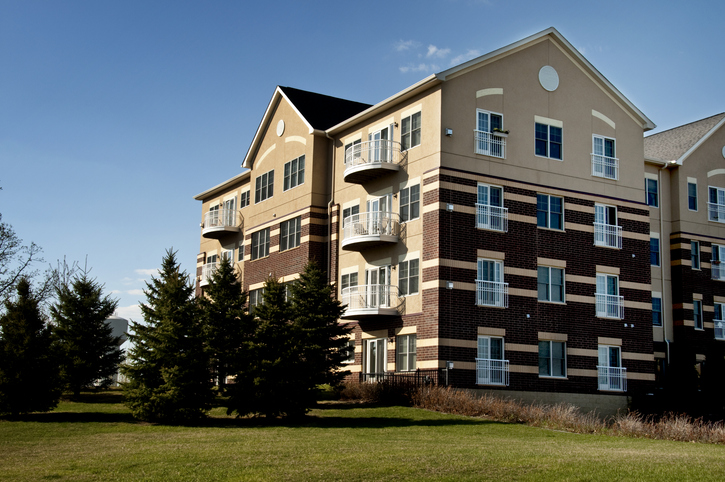
Senior Housing
Invest in independent living, assisted living and memory care communities. Results depend on occupancy and on the operator.
- Property typeSeniors housing
- Typical structureLeveraged / all-cash
- Investor roleFully passive
These are illustrations of property types, not an offer to sell or a solicitation to buy any security. No specific DST offering, sponsor, projected distribution, or performance figure is shown. Availability changes continually, and offering materials are provided only to verified accredited investors following a suitability discussion. All DST investments involve risk, including possible loss of principal, and distributions are not guaranteed. Please see the risk section and important disclosures on this page.
How a DST Fits Into a 1031 Exchange
Sell Property
Investor sells qualifying investment real estate.
QI Holds Funds
Qualified Intermediary holds the exchange proceeds.
Review DSTs
Investor evaluates one or more available DST offerings.
Identify + Close
DST interests are identified and funded within applicable 1031 deadlines.
Passive Ownership
Sponsor manages the real estate; investor receives reporting and potential distributions.
The qualified intermediary is separate from GCA 1031 and from the DST sponsor. GCA 1031 helps evaluate strategy and investments; the QI holds exchange funds and facilitates the exchange mechanics; the sponsor owns and operates the property through the trust.

Why Work With GCA 1031 as Your DST Investment Consultant in the USA
What Are DST Investments?
A Delaware Statutory Trust (DST) is a legal trust structure that allows multiple investors to co-own institutional-grade real estate. The trust holds title to the property (or portfolio of properties), while investors own beneficial interests in the DST.
For federal tax purposes, certain DSTs are treated as owning real estate directly. Under IRS Revenue Ruling 2004-86, a properly structured DST can qualify as “like-kind” real property for purposes of a Section 1031 exchange, allowing investors to exchange investment real estate into DST interests without immediate recognition of capital gain, as long as all 1031 requirements are met.
DSTs and the 1031 Exchange
A 1031 exchange (also called a like-kind exchange) lets you defer capital gains taxes when you sell investment or business real estate and reinvest the proceeds into other qualifying real estate of equal or greater value, following strict IRS rules and timelines (45 days to identify, 180 days to close).
Because DSTs are recognized as qualifying replacement property when structured correctly, they have become a popular way for investors to:
- Defer capital gains tax and depreciation recapture
- Move from actively managed properties into professionally managed, passive real estate
- Diversify across property types and geographic regions
What Are You Actually Buying in a DST?
When you invest in a DST, you purchase a beneficial interest in the trust rather than taking direct deeded title to an individual property. The DST holds title to the real estate, while the sponsor or its affiliates oversee the property within the limits of the DST structure. For federal tax purposes, a properly structured DST that meets the requirements described in Revenue Ruling 2004-86 can be treated as an interest in real property for purposes of a 1031 exchange.
A DST may own a single property or a portfolio of properties. Investors generally do not participate in day-to-day operations, leasing decisions, financing decisions, or the timing of a sale. That lack of control is part of what makes the investment passive, but it is also an important risk investors should understand before investing.
DST vs. Buying Another Property Directly
| Topic | Direct Replacement Property | DST Investment |
|---|---|---|
| Ownership | Direct title / ownership entity | Beneficial interest in a trust that owns the property |
| Property Management | Owner or hired manager | Sponsor / professional property manager |
| Day-to-Day Control | Generally higher | DST investors are passive |
| Diversification | Often concentrated in one or a few assets | May allocate across multiple DSTs / sectors / markets |
| Financing | Investor arranges and is responsible for financing | If leveraged, debt is generally at the DST level and non-recourse to the investor |
| Liquidity | Direct real estate can take time and cost to sell | Highly illiquid private placement with generally no public secondary market |
Neither structure is better in every situation. The right choice depends on the investor’s objectives, time horizon, tolerance for illiquidity, and preference for control versus passive ownership.
The DST Lifecycle
Invest / Fund
Exchange proceeds or cash are used to purchase beneficial interests.
Sponsor Operates
The sponsor manages leasing, operations, financing, and reporting.
Distributions + Reporting
Investors may receive periodic distributions and property updates.
Property Sale
The sponsor decides when to sell within the business plan.
Cash Out or Exchange
Investors may cash out or consider another 1031 exchange.
Hold period, timing, distributions, and sale proceeds are not guaranteed. Investors do not control the timing of a sale.
Key Benefits of DST Investments
While DSTs are not right for everyone, they offer a combination of features that many investors—especially long-time landlords exiting active management—find compelling.
1. Tax Deferral Through 1031 Exchanges
When you exchange a relinquished property into a qualifying DST through a 1031 exchange:
- Capital gains tax and depreciation recapture are deferred, allowing you to keep more equity working for you.
- You may be able to “swap ’til you drop” rolling from one 1031 exchange into another (including from one DST into another) during your lifetime, while your heirs may receive a stepped-up basis at death under current tax law (talk with your tax advisor about your specific situation).
2. Access to Institutional-Quality Real Estate
DSTs typically hold institutional-grade commercial properties, such as multifamily communities, medical offices, industrial logistics facilities, or essential retail centers, that would be difficult for most individual investors to purchase outright.
- Minimum investment thresholds are often in the $100,000 range rather than the millions required to buy the entire property.
- This structure lets you participate in larger, professionally managed properties while committing only a portion of your exchange proceeds to each DST.
1031 DST investments
3. Passive Ownership and Professional Management
DST investments are designed to be truly passive:
- A professional sponsor and property manager handles leasing, maintenance, asset management, and eventual sale.
- Investors typically receive regular cash-flow distributions (not guaranteed) and periodic reports without having to manage tenants, repairs, or day-to-day operations themselves.
This appeals to investors who:
- Are nearing or in retirement
- Are tired of hands-on property management
- Want to simplify their real estate holdings while maintaining income potential.
4. Diversification by Property Type and Location
DSTs make it possible to spread your exchange equity across multiple offerings, which may help reduce concentration risk:
- You can allocate into several DSTs that invest in different sectors (multifamily, self-storage, industrial, medical, etc.).
- You can diversify across regions, potentially balancing exposure to different economic drivers, rent growth patterns, and regulatory environments.
5. Non-Recourse Debt and Estate Planning Advantages
Exchange equity from the investor Non-recourse debt at the trust level DST acquires the property trust is the borrower, not the investor Not every DST uses leverage. All-cash DSTs also exist.
Many DSTs use non-recourse financing, where the loan is made to the DST, not to individual investors personally:
- This can help investors satisfy the 1031 debt-replacement rules without taking on recourse debt.
- The DST structure can simplify estate planning because fractional interests can be more easily divided among heirs than a single property directly owned.
Not All DSTs Are Created Equal
Projected cash flow is only one part of the analysis. Two DST offerings can show similar projected distributions while carrying very different levels of risk based on the sponsor, purchase basis, property quality, tenant or lease structure, leverage, debt terms, reserves, market fundamentals, fees, underwriting assumptions, and exit strategy.
GCA 1031’s due diligence focuses on whether the underlying real estate and investment structure can support the investment thesis — not simply on the headline distribution rate.
What We Review Before Recommending a DST
Sponsor
Track record, financial strength, experience, and execution history.
Real Estate
Purchase basis, condition, occupancy, tenant quality, and lease structure.
Market
Supply/demand, rent trends, economic drivers, and regulatory environment.
Debt
Leverage, fixed/floating rate, maturity, covenants, and refinance exposure.
Reserves
Upfront reserves and ability to absorb property-level surprises.
Fees
Acquisition, selling, management, financing, disposition, and other costs.
Cash Flow Assumptions
Rent growth, expense growth, occupancy, concessions, and tenant rollover.
Exit Strategy
Hold assumptions, projected sale timing, exit cap rate, and downside scenarios.
Due diligence reduces neither market risk nor the risk of loss. No review process can guarantee an outcome.
Important Risks and Considerations With DST Investments
Any honest discussion of DST investments must also highlight the risks and limitations. These offerings are typically suitable only for accredited investors and involve material risks, including possible loss of principal.
Key considerations include:
1. Illiquidity
- DST interests are highly illiquid. There is usually no public secondary market.
- You should be prepared to hold for the full term, commonly 5–10 years or more, depending on the business plan and market conditions.
2. Lack of Control
- Investors are passive. They do not vote on day-to-day management decisions or when to sell the property.
- Major decisions (sale, lease changes) are handled by the sponsor within the limited powers allowed under IRS guidance (to preserve DST status under Revenue Ruling 2004-86).
3. Market, Interest Rate, and Sponsor Risk
- DST performance depends on property cash flows, occupancy, market rents, interest rates, and the sponsor’s execution.
- Rising interest rates, regional economic slowdowns, or tenant issues can impact distributions and property value.
4. Fees and Expenses
- DSTs typically include upfront and ongoing fees, such as acquisition, management, and disposition fees, as well as selling commissions, which can affect net returns.
Because of these factors, it’s critical to work with a knowledgeable DST/1031 consultant who can help you understand the structure, evaluate risk, and decide whether specific DST offerings align with your goals and risk tolerance.
Illiquidity
No public secondary market. Plan to hold for the full business plan.
Lack of Control
The sponsor makes operating and sale decisions, not the investor.
Market & Sponsor Risk
Occupancy, rents, interest rates, and sponsor execution drive results.
Fees & Expenses
Upfront and ongoing fees and commissions reduce net returns.
DST investments involve risk, including possible loss of principal. This summary supports the detailed risk discussion above; it does not replace it.
Why Work With a DST Investment Consultant?

Ashley Romiti 1031 exchange DST investments
DSTs and 1031 exchanges sit at the intersection of tax law, real estate, and securities regulation. A specialist DST consultant can:
- Help you decide whether a DST fits your objectives vs. other 1031 replacement options
- Coordinate with your qualified intermediary, CPA, and attorney
- Present and explain multiple DST offerings with different property types, leverage levels, and risk/return profiles
- Assist with timing, paperwork, and due diligence to keep you within IRS deadlines
Thoughtful industry guidance suggests choosing a DST advisor who:
- Has a broad platform of offerings (leveraged and all-cash)
- Completes a large number of DST transactions each year
- Provides education and transparent risk disclosure, not just product sales
GCA 1031: Your Partner in DST Investments
In this complex environment, GCA 1031 is a dedicated DST investment and 1031 exchange consulting firm serving investors across the United States.
Rather than leaving you to navigate a maze of property offerings, deadlines, and legal nuances, GCA 1031 focuses on building a clear, step-by-step path from your current real estate to an appropriate portfolio of DST replacement properties.
1. Exclusive Focus on DST and 1031 Strategies
GCA 1031’s core mission is to help investors:
- Defer capital gains and depreciation recapture through IRS-compliant 1031 exchanges
- Transition from actively managed, hands-on properties into passive DST investments
- Align their replacement properties with long-term income, diversification, and estate planning goals
By focusing on DST and 1031 strategies rather than spreading attention across many unrelated products, GCA 1031 can stay deeply current on DST market trends, sponsor quality, and evolving tax/IRS guidance.
2. Personalized DST Investment Planning
Every 1031 exchange is unique. GCA 1031 emphasizes custom planning rather than a one-size-fits-all approach. A typical engagement may include:
- Discovery & Objectives
- Understanding your goals: income needs, risk tolerance, time horizon, and estate planning priorities
- Reviewing the specifics of your relinquished property, debt structure, and tax position (in coordination with your CPA)
- Education & Option Review
- Explaining how DSTs compare with other 1031 options (direct property, TICs, NNN, etc.)
- Walking through sample DST offerings, including property type, geography, tenant mix, leverage, hold period, and distribution history
- Portfolio Design
- Building a custom DST allocation strategy that may diversify by property type and region
- Ensuring the plan meets IRS 1031 rules for value and debt replacement
- Execution & Ongoing Support
- Coordinating timing with your qualified intermediary for identification and closing
- Helping you track distributions and sponsor reporting over the life of each DST investment
3. Due Diligence on DST Sponsors and Offerings
One of the most challenging aspects of DST investing is sorting through offerings and sponsors. GCA 1031 emphasizes:
- Reviewing sponsor track records, property management experience, and capital structures
- Evaluating assumptions behind projected cash flows, exit cap rates, and debt terms
- Considering risk factors such as tenant concentration, lease rollover schedules, and market fundamentals
This due diligence helps investors avoid focusing solely on headline distribution rates and instead understand the real risk/return profile of each DST.
The GCA 1031 underwriting framework:
- Sponsor
- Real Estate
- Market
- Debt
- Reserves
- Fees
- Cash Flow Assumptions
- Exit Strategy
4. Nationwide Reach and Coordination With Your Advisors
DST offerings are typically national in scope, and 1031 rules are federal. GCA 1031 works with:
- Investors in multiple states, helping them exchange out of properties in one region into diversified DSTs across the country
- Your CPA, tax attorney, and estate planning attorney, so that your 1031/DST strategy fits into your broader financial plan
- Qualified intermediaries (QIs) and custodians to keep your transaction organized and compliant with IRS timelines
5. Education-First Approach
GCA 1031 aims to act as a teacher and guide, not just a product provider. That includes:
- Plain-English explanations of complex topics like Revenue Ruling 2004-86, grantor trust status, and DST structural limits
- Honest discussions about illiquidity, lack of control, and potential downside scenarios
- Clear documentation and ongoing communication, so you understand what you own and how it’s expected to perform
6. Transparency and Alignment
DST investments involve fees and incentives. GCA 1031 strives to:
- Explain how sponsors and selling firms are compensated
- Show how fees affect net distributions and total return potential
- Focus on long-term client relationships, understanding that successful outcomes and referrals are built on transparency and trust
Who Might Consider DST Investments Through GCA 1031?
While each situation is unique, DST investments through GCA 1031 may be worth exploring if you are:
- An investor with a highly appreciated investment or commercial property facing a large tax bill upon sale
- A landlord seeking to step back from active management without giving up real estate-based income potential
- Nearing retirement and wanting more predictable, professionally managed investments
- Interested in diversifying out of a single property or location into multiple DSTs with different sectors and markets
- Looking for a structured succession or estate plan that simplifies passing real estate wealth to heirs
If you are not an accredited investor, have a very short time horizon, or require liquidity, DSTs may not be a good fit. GCA 1031 will help you explore these questions candidly before you proceed.

Review DST Options Before the 45-Day Clock Starts
When possible, investors should begin evaluating DST strategy and available replacement options before the relinquished property closes. Once the sale closes, the 45-day identification period begins immediately and runs concurrently with the 180-day exchange period. Starting early creates more time to review the underlying real estate, sponsor, leverage, fees, and risks rather than making a decision primarily because a deadline is approaching.
The GCA 1031 Process: From Initial Call to DST Portfolio
Here’s a high-level overview of how working with GCA 1031 typically unfolds:
Initial Conversation
Coordination With Your Advisors
DST Education & Shortlist
Portfolio Construction & Identification
Closing & Funding
Post-Closing Monitoring
- Initial Conversation
- Discuss your current property, estimated gain, timing, and goals.
- Determine whether a 1031 exchange and DST strategy is worth pursuing.
- Coordination With Your Advisors
- Loop in your CPA and qualified intermediary.
- Confirm your accredited investor status and review any constraints or requirements.
- DST Education & Shortlist
- Review a curated list of DST offerings that match your profile (property type, leverage level, risk tolerance).
- Receive clear, written disclosures and offering materials.
- Portfolio Construction & Identification
- Select a diversified set of DST investments (when appropriate) for your 45-day identification period.
- Align allocation and debt levels with IRS rules.
- Closing & Funding
- Work with your QI and GCA 1031 to complete the required paperwork and fund the DSTs within the 180-day window.
- Post-Closing Monitoring
- Track distributions, sponsor communications, and property updates.
- Consider future 1031 exchanges or exit strategies as each DST moves through its life cycle.
Important Disclosures
- DST interests are securities and involve risks, including possible loss of principal and lack of liquidity.
- DST and 1031 strategies are typically available only to accredited investors and may not be suitable for all investors.
- GCA 1031 does not provide tax or legal advice. You should consult with your own CPA, attorney, and financial advisor regarding your specific situation.
- Past performance of real estate or DST offerings is not a guarantee of future results.
Ready to Explore DST Investments With GCA 1031?
If you’re considering selling investment property and want to:
- Defer capital gains taxes.
- Transition out of active management.
- Build a diversified, professionally managed real estate portfolio.
Then DST investments may be worth a closer look.
GCA 1031 can walk you through the details, present DST options in line with your goals, and help coordinate your 1031 exchange from start to finish.
We Are Always Ready to Assist Investors with 1031 Exchanges and DST Strategies
Call Now (949) 235-5606
DST Investments and GCA 1031 Frequently Asked Questions
1031 DST investments questions
1. What is a Delaware Statutory Trust DST in simple terms?
A Delaware Statutory Trust DST is a legal trust structure created under Delaware law that can hold title to one or more real estate properties. Investors buy beneficial interests in the trust, which give them an economic interest in the underlying real estate without owning or managing the properties directly. For federal tax purposes, when a DST is structured under Revenue Ruling 2004-86, the IRS treats each investor as owning an undivided interest in the real estate that the DST holds.
2. How does a DST work with a 1031 exchange?
In a 1031 exchange, you sell an investment or business property and reinvest the proceeds into like-kind real estate to defer capital gains taxes. A properly structured DST is treated as qualifying replacement real estate under Section 1031, which means you can use your exchange proceeds to purchase interests in a DST. The DST owns the property, and you own a fractional beneficial interest that is considered like kind to the property you sold, as long as all 1031 rules and timelines are satisfied.
3. Why do investors choose DST investments instead of buying another property directly?
Many investors choose DST investments to retain the tax benefits of real estate while avoiding the day-to-day management responsibilities. A DST can provide
- Access to larger institutional quality properties
- Passive income potential with professional management
- The ability to diversify across different property types and locations
Instead of buying one replacement property and becoming a landlord again, you can allocate your exchange proceeds into several DSTs that hold different properties in different markets.
4. What are the main benefits of using a DST in a 1031 exchange?
Common benefits include
- Tax deferral on capital gains and depreciation recapture when the 1031 rules are followed
- Passive ownership with professional sponsors handling operations, leasing, and maintenance
- Potential diversification by property type, tenant mix, and geography
- The ability to structure non-recourse debt at the DST level to help meet exchange debt replacement requirements
- Estate planning advantages, because fractional interests can be divided among heirs more easily than a single property
These benefits make DSTs especially attractive to long-time landlords who want income and tax advantages but no longer want to manage their properties.
5. What are the main risks and drawbacks of DST investments?
DST investments are not suitable for everyone. Key risks include
- Illiquidity
DST interests are highly illiquid. There is usually no active secondary market, and you should be prepared to hold the investment for the whole business plan, which is often several years or more. - Lack of control
Management is truly passive. The sponsor and manager make the decisions on operations and the eventual sale of the property. Investors do not vote on most business matters. - Market and sponsor risk
Performance depends on property-level cash flow, tenant stability, local market conditions, interest rates, and the sponsor’s ability to execute its plan. Poor execution or adverse market events can reduce income or value. - Fees and expenses
DSTs usually include acquisition, management, and disposition fees that can affect net returns.
Because of these factors, careful due diligence and guidance from a specialist like GCA 1031, along with your own tax and legal advisors, are essential.
6. Who is typically eligible to invest in DST offerings?
Most DST offerings are available only to accredited investors. An accredited investor is generally an individual with a net worth of at least $1 million, excluding a primary residence, or sufficient qualifying income, or an entity that meets similar financial standards. DST sponsors and regulators require this level of investor because of the complexity, illiquidity, and risk of these private real estate securities.
Investors should confirm their status with their CPA or advisor and review each offering document carefully before investing.
7. How long do DST investments usually last?
DST investments are designed for medium- to long-term holding. Many business plans anticipate a hold period of 3 to 10 years, depending on market conditions, lease structures, and financing terms. The actual hold period may be shorter or longer than the target, as investors do not control the timing of the sale. For this reason, investors should treat DST interests as long-term, illiquid investments.
8. What happens when a DST property is sold?
When a DST property reaches the end of its business plan and is sold, investors typically receive a final distribution of sale proceeds. At that point, you may
- Complete another 1031 exchange into a new DST or other qualifying real estate.
- Cash out and recognize any taxable gain. Work with your advisors to decide which path fits your goals at that time.
This ability to move between exchanges is one reason some investors use DSTs as part of a long-term real estate tax strategy.
9. Why should I use GCA 1031 instead of trying to select DSTs on my own?
DSTs combine real estate, securities, and tax rules. It can be difficult for individual investors to compare offerings and independently evaluate sponsor quality. GCA 1031 focuses on DST and 1031 strategies and can
- Clarify whether a DST is appropriate for your situation
- Help you understand the benefits and risks in plain language
- Review multiple sponsors and offerings instead of just one product line
- Build a custom allocation of DSTs that matches your goals, risk profile, and exchange requirements.
- Coordinate timelines and paperwork with your qualified intermediary and tax professionals.
In short, GCA 1031 helps you turn a complicated set of choices into a structured process with clear explanations and ongoing support.
10. How does GCA 1031 help during the strict 1031 deadlines?
A successful exchange must meet both the 45-day identification deadline and the 180-day closing deadline. These time limits can create stress for property owners who are also shopping for new properties. GCA 1031 helps by preparing a list of potential DST offerings in advance of your closing, when possible, and by explaining structures, leverage levels, and income expectations before you must make those decisions—working alongside your qualified intermediary so that identification forms and subscription documents are accurate and timely. This planning can reduce the risk of missing deadlines and losing tax deferral due to running out of time or failing to find suitable replacement property.
11. Does GCA 1031 replace my CPA or attorney?
No. GCA 1031 does not provide tax or legal advice. Instead, GCA 1031 works in coordination with your CPA, attorney, and qualified intermediary.
- Your CPA and attorney remain responsible for advice on your specific tax situation, entity choice, estate plan, and legal issues.
- GCA 1031 focuses on DST and 1031 strategy, education, and selection of appropriate offerings within that framework.
This team approach helps ensure that your DST investments align with your broader financial and estate plans.
12. Can I use cash, not just exchange proceeds, to invest in a DST with GCA 1031?
Yes. While many investors use DSTs as replacement property in a 1031 exchange, some DST offerings also accept direct cash investments from investors who are not currently completing an exchange. For these investors, DSTs can still offer potential benefits such as passive income, professional management, and diversification, though without the immediate tax deferral of a 1031 transaction. Suitability and structure should always be reviewed in light of your personal circumstances.
13. How can I tell if a DST strategy with GCA 1031 is right for me?
A DST strategy may be worth exploring with GCA 1031 if
- You own an appreciated investment or commercial real estate
- You want to defer capital gains but also want less hands-on management
- You are comfortable committing capital to a long-term illiquid investment
- You are an accredited investor and can accept real estate and sponsor risk
The next step is usually a conversation in which GCA 1031 learns about your property, goals, and time frame. From there, you and your advisors can decide whether to proceed with a 1031 exchange and a DST plan.
14. What should I do before contacting GCA 1031?
Before you speak with GCA 1031, it can be helpful to:
- Confirm that your property qualifies as investment or business real estate
- Obtain a rough estimate of your potential gain and tax exposure from your CPA
- Talk with a qualified intermediary, or identify one you may want to use
- Consider your income needs, risk tolerance, and family or estate planning goals
Arriving with this information allows GCA 1031 to provide more precise education and to show examples of DST solutions that fit your situation.
“A DST is one of the few strategies where investors can diversify, defer taxes, and simplify life in a single move.”
ASHLEY ROMITI
Explore More From GCA 1031
- 1031 Exchanges Rules, deadlines, and how the exchange itself works.
- Tax Mitigation Strategies Options beyond a 1031 exchange for deferring or reducing tax.
- Real Estate Exit Analysis Modeling what a sale, an exchange, or holding actually produces.
- Oil & Gas Investing Another income and tax-oriented alternative investment.
- Opportunity Zone Funds A different deferral route for capital gains.
- All Investment Services The full range of strategies GCA 1031 works with.
- DST Investor Guide A written guide to DST structure, risk, and due diligence.
- Case Studies How real exchanges were structured, start to finish.
- Investor FAQs Common 1031 and DST questions in one place.
- Blog and Market Commentary Current thinking on sponsors, sectors, and the DST market.
- About GCA 1031 Real estate background, team, and how the practice works.
- Contact GCA 1031 Start a conversation about your property and timing.
1031 Exchange Rules by State
Exchange mechanics are federal, but state tax treatment and withholding rules differ. GCA 1031 works with investors nationwide.
- California
- Texas
- Florida
- Arizona
- Nevada
- Washington
- Oregon
- New York
- Georgia
- North Carolina
- Utah
- Pennsylvania
Additional states are listed in the site footer. Representatives may only conduct business with residents of the states and jurisdictions in which they are properly registered.
Primary Sources and Investor Resources
The rules described on this page come from published IRS and SEC guidance. Investors are encouraged to read the primary sources directly.
- IRS Revenue Ruling 2004-86The ruling that describes when an interest in a Delaware Statutory Trust may be treated as an interest in real property for purposes of Section 1031.
- IRS — Like-Kind Exchanges, Real Estate Tax TipsThe IRS overview of Section 1031, including what qualifies as like-kind real property and the effect of receiving boot.
- IRS Form 8824, Like-Kind ExchangesThe form used to report an exchange and calculate deferred gain and the basis of the replacement property.
- IRS Publication 544, Sales and Other Dispositions of AssetsHow gain or loss is figured on a disposition, including depreciation recapture and nontaxable exchanges.
- SEC — Accredited InvestorsThe current wealth, income, and professional-certification standards that determine who may invest in most DST offerings.
- SEC Investor Bulletin — Private Placements Under Regulation DWhat to ask before investing in an unregistered offering, and why restricted securities should be treated as long-term and illiquid.
- SEC — Private Placements Under Rule 506(b)The exemption most DST offerings are sold under, and the disclosure and solicitation limits that come with it.
- SEC Investor.gov — Five Questions to Ask Before You InvestA short, plain-language checklist to run through before committing money to any investment, including who is selling it and how they are paid.
- FINRA — Protecting Older Investors From Financial ExploitationWarning signs of pressure and fraud aimed at retirees, plus FINRA’s Securities Helpline for Seniors at 844-574-3577.
- FINRA BrokerCheckCheck the registration and disciplinary history of any firm or representative before investing.
Links to third-party websites are provided for informational purposes only. GCA 1031 and Concorde Investment Services, LLC do not control and are not responsible for the content of any third-party site, and a link is not an endorsement. IRS and SEC materials describe general rules and do not address any individual’s circumstances — consult your own CPA and attorney.