
South Dakota 1031 Exchange Real Estate Rules
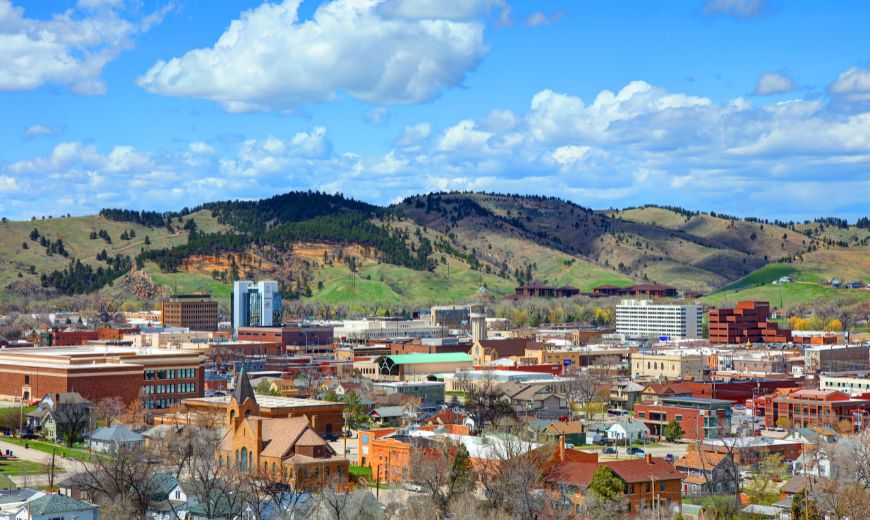
South Dakota calls for a different 1031 exchange conversation than many other states. The issue is not whether the investor is trying to defer both federal and state income tax on a sale. South Dakota does not impose an individual income tax, so the 1031 analysis here is more about preserving federal tax deferral, keeping more capital in play, and making smarter portfolio moves without unnecessary tax friction at the federal level. South Dakota’s Department of Revenue does not include a state individual income tax on its list of taxes for individuals, which is one of the reasons the state is often viewed as especially tax-efficient for investors. (South Dakota Department of Revenue)
That does not mean a South Dakota exchange is simple or generic. The state’s market is shaped by a combination of affordability, population growth, agriculture, manufacturing, bioscience, and emerging technology-oriented industries. The Governor’s Office of Economic Development identifies South Dakota’s key industries as manufacturing, bioscience, value-added agriculture, livestock development, precision agriculture, and cybersecurity. Those industry drivers support a range of real estate investment strategies across markets such as Sioux Falls, Rapid City, Aberdeen, Brookings, Watertown, and surrounding growth corridors. (South Dakota GOED Key Industries)
South Dakota’s population estimate increased to 935,094 in 2025, up from 924,669 in 2024. That is meaningful in a smaller state because it helps reinforce demand for housing, service-oriented commercial property, and selected investment assets in the strongest submarkets.
With appreciation comes capital gains exposure.
Understanding the South Dakota 1031 exchange rules is essential for investors who want to preserve equity, defer taxes, and reposition their portfolios without immediately recognizing gain.
A properly structured exchange under Section 1031 of the Internal Revenue Code allows a South Dakota investor to sell real estate held for investment or business use and reinvest into like-kind real estate while deferring federal gain recognition.
Why South Dakota Is Different
South Dakota is different because the state-level tax conversation is lighter on income tax and heavier on transaction structure, federal exposure, and long-term allocation of capital. In a state with no personal income tax, a seller may still have a very strong reason to exchange because the federal side of the transaction remains significant. Depreciation recapture planning still matters. Gain deferral still matters. Debt replacement still matters. The exchange remains a real planning tool even when the state income tax issue is smaller or nonexistent. (South Dakota Department of Revenue)
South Dakota also has its own closing mechanics. The Department of Revenue’s Register of Deeds guidance explains that no register of deeds may accept a deed or contract for deed unless it is accompanied by a certificate of value containing the buyer and seller information, legal description, actual consideration, relationship of the parties if any, and payment terms. The same guidance also notes that exemptions from the deed transfer fee are governed by state law and identifies many exempt transfer categories. (South Dakota Register of Deeds Guidance)
What Qualifies in a South Dakota 1031 Exchange
South Dakota follows the same federal eligibility framework as other states. The relinquished and replacement properties must be U.S. real estate and must be held for investment or productive use in a trade or business.
In practical South Dakota terms, that can include rental homes, apartment buildings, mixed-use properties, agricultural land held for investment, industrial and warehouse assets, hospitality properties held for investment, medical office assets, self-storage, land held for investment, and Delaware Statutory Trust interests.
Property that generally does not qualify includes primary residences, personal-use vacation property, and property held primarily for resale. Investors involved in flips or short-hold resale strategies should be especially careful not to confuse inventory with investment property.
How a South Dakota Exchange Usually Gets Built
The exchange should be planned before the property goes on the market. Investors should model expected gain, identify depreciation recapture exposure, review the debt structure, clarify what type of replacement property they actually want, and engage the Qualified Intermediary before closing.
Once the relinquished property closes, the federal clock starts. The investor has exactly 45 days to identify replacement property and generally 180 days to complete the acquisition. Sale proceeds must go to the Qualified Intermediary. The seller cannot receive or control the funds without jeopardizing the exchange.
In South Dakota, the deed-recording side should also be part of the plan. The register of deeds process and certificate-of-value requirements need to be handled correctly, and transfer-fee exemptions should be identified in advance where applicable. (South Dakota Register of Deeds Guidance)
South Dakota Tax and Closing Mechanics
South Dakota’s biggest tax distinction for many investors is the lack of a state individual income tax. That means the exchange is usually being driven primarily by federal gain deferral rather than by a need to defer state personal income tax. For investors relocating capital from or to South Dakota, that can materially change the math of the transaction. (South Dakota Department of Revenue)
But South Dakota is not friction-free at closing. The Department of Revenue explains that deed transfer fees are imposed under SDCL 43-4-21, and its Register of Deeds guidance specifically points users to the fee statute and the exemptions under SDCL 43-4-22. County-level guidance commonly reflects the standard fee as $0.50 per $500 of consideration, although investors should always confirm the current application and any exemption with the county recording office handling the deed. (South Dakota Register of Deeds Guidance)
This is one of the most important South Dakota-specific distinctions. The state may be very favorable from an income-tax perspective, but deed transfer fees, certificate-of-value requirements, and recording mechanics still matter and should be addressed before closing.
Boot Still Matters in South Dakota

South Dakota does not change the federal boot analysis. If the investor receives cash, reduces debt without replacing it, or otherwise receives non-like-kind value, that amount may become taxable. Investors who want full deferral still generally need to buy equal or greater value, reinvest all net equity, and replace equal or greater debt, or add fresh cash where needed.
Because South Dakota does not impose an individual income tax, some investors can become too casual about partial deferral. That can be a mistake. The federal side of the transaction is still large enough that boot can materially reduce the economic benefit of the exchange.
What Actually Creates Risk in South Dakota
The obvious risks still matter: missing the 45-day deadline, weak identification language, taking possession of exchange funds, and underestimating debt replacement needs. But South Dakota also carries a more practical risk. Investors sometimes assume a low-tax state means a simple closing, and that assumption can cause them to overlook recording mechanics, certificate-of-value requirements, or exemption analysis.
Another risk is treating South Dakota as a uniform market. A multifamily thesis in Sioux Falls does not necessarily resemble an investment-land thesis elsewhere in the state, and both are different from a hospitality or industrial play near one of the state’s larger economic centers. The strongest South Dakota exchanges are usually built around a clear reinvestment thesis, not just a desire to defer gain.
Why Work With GCA1031 in South Dakota
In South Dakota, a strong exchange advisor is doing more than tracking federal deadlines. They are helping the investor use a tax-efficient state environment intelligently while still respecting the federal rules and the state’s local recording framework.
GCA1031 helps coordinate the Qualified Intermediary process, the tax analysis, the closing team, and the South Dakota-specific issues that make these transactions different – especially the fact that there is no state individual income tax, but there are still deed transfer fee and recording requirements that matter.
Start Your South Dakota 1031 Exchange
If you are searching for South Dakota 1031 exchange rules, how to do a 1031 exchange in South Dakota, or South Dakota exchange guidance that reflects the state’s actual tax and closing structure, GCA1031 provides structured, compliant execution from pre-listing planning through closing.
Contact our exchange specialists before listing your property so the exchange is built around your gain, your market, and your next acquisition strategy.